I'll be honest with you — the first time I searched for the best small business insurance, I opened about fifteen browser tabs, got overwhelmed within ten minutes, and closed all of them. Every site had a different "top 5" list, different numbers, and different opinions on which provider was "the best." None of it told me what I actually needed to know: how do you compare these things when you're not an insurance expert?
It took me weeks of actually going through quotes, reading claim horror stories on forums, and talking to a couple of business owner friends before I understood what "best" really means in this context. Spoiler: it's not the cheapest option, and it's not always the biggest brand name either. It's the one that actually pays out when something goes wrong.
This guide is the one I wish I'd found back then — written for business people and professionals who want a straight answer, not a sales pitch.
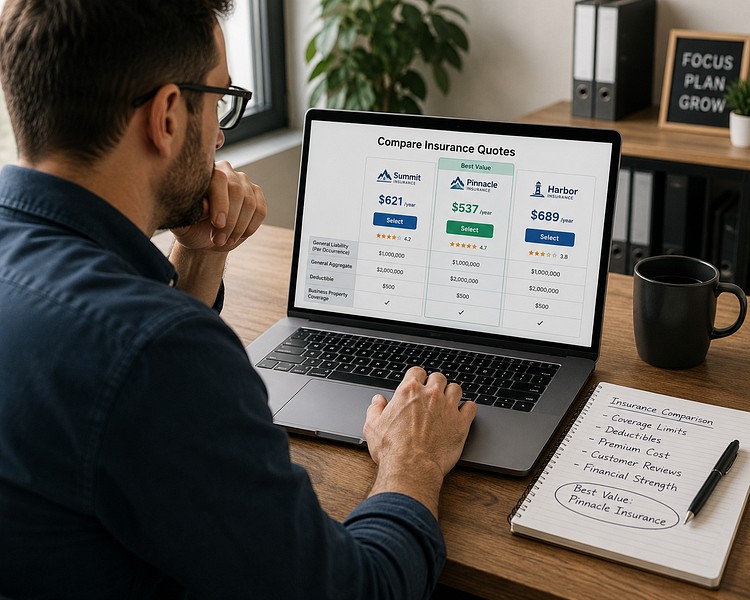
What "Best" Actually Means in Insurance
Here's something nobody tells you upfront: the best policy isn't the one with the lowest premium. It's the one that's still standing behind you when you actually file a claim.
There's a story I keep coming back to because it illustrates this so well. At a summer camp, two instructors carried their own professional liability insurance. When a student got hurt on their watch, their insurers paid out the settlements, and life moved on for them. The camp owner, though, didn't have adequate coverage — and ended up stuck in litigation for over two decades, draining time, money, and sanity in the process.
That's the real test of "best." Not the marketing page. Not the app rating. Whether the policy actually does its job when you need it most — including covering your legal defense costs even if the claim against you turns out to be baseless.
How I Actually Evaluate Insurers Now
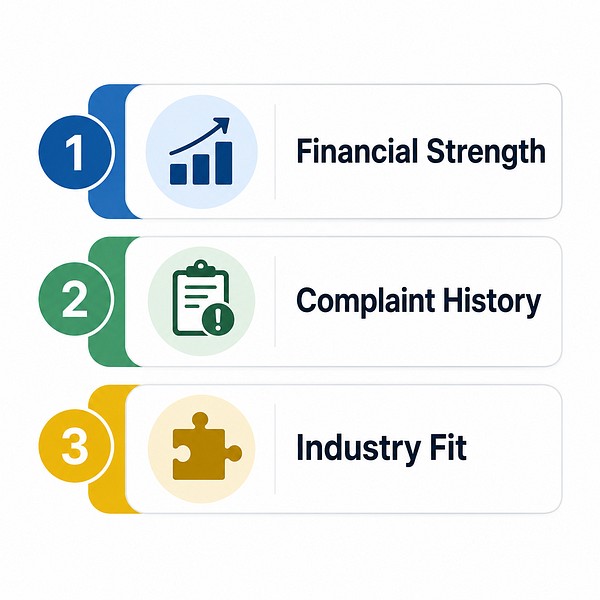
Once I understood what mattered, I stopped comparing insurers on price alone. Here's the framework I use now, and it's genuinely simple once you know it.
Financial Strength Ratings
The single most useful thing I learned was to check AM Best ratings before looking at anything else. This tells you whether an insurer actually has the capital reserves to pay out claims during a bad, catastrophic year — not just a normal one. Ratings like "A" (Excellent), "A+" (Superior), or "AA++" indicate strong financial health. You can look this up yourself at ambest.com before signing anything.
Complaint History
The second thing I check is complaint data through the National Association of Insurance Commissioners (NAIC). This tracks how often customers file complaints about denied claims or poor service, relative to the insurer's size. An insurer can have a great ad campaign and still have a rough complaint record — this is where you find out.
Fit for Your Specific Industry
The third, and honestly most overlooked factor, is whether the insurer actually understands your line of work. A generic policy built for a retail shop won't serve a tech consultant well, and vice versa. This is where insurance for small business owners gets personal — your ideal provider depends entirely on what you actually do.
The Providers That Actually Stood Out (US Market)
I'm not going to pretend every insurer is equally good for every business. Based on ratings, complaint data, and how well they serve different niches, a handful genuinely stand out.
Allianz carries an A+ Superior rating and an "Extremely Low" NAIC complaint level. What impressed me most is their Allianz Risk Consulting (ARC) team, which actually does site surveys and reviews to help you avoid claims before they happen — that's a proactive approach most insurers don't bother with.
The Hartford has been around long enough to serve over a million small businesses, holds an A+ rating, and offers Business Owner's Policies tailored to hundreds of specific professions. If you want a legacy carrier with a track record, this is usually where people land.
NEXT Insurance is the one I'd point freelancers and solo entrepreneurs toward. It's a fully digital, direct-to-consumer insurtech with an A- rating, and you can generate a certificate of insurance (COI) instantly online — genuinely useful if a client needs proof of coverage on short notice, which happens more often than you'd think.
Chubb carries an impressive AA++ rating and is particularly strong for businesses with international exposure or complex, non-standard risks.
Hiscox and Liberty Mutual round out the list — Hiscox for specialized tech and consulting liability coverage, and Liberty Mutual for its fast, app-based claims process.
For a broader independent comparison of ratings across these carriers, Forbes Advisor maintains an updated list worth cross-checking at forbes.com/advisor
What About the Indian Market?
If you're running a business in India, the landscape looks a little different, and honestly, it's matured a lot in the last few years. ICICI Lombard and HDFC Ergo dominate the MSME insurance space, and both have built genuinely modular products instead of forcing you into rigid bundles.
HDFC Ergo's "Business Suraksha" policy lets you pick individual coverages — fire, burglary, money in transit, workmen's compensation — without paying for extras you don't need. It's also worth noting HDFC Ergo has posted a Claim Settlement Ratio of 96.71% in the health insurance vertical, which is a strong signal of reliability.
ICICI Lombard, meanwhile, has processed over 3.6 million claims and issued more than 32 million policies. What stood out to me is their claims speed — they can settle MSME claims up to S77;5 lakh within ten days through a virtual survey link, cutting out a lot of the bureaucratic back-and-forth that usually slows things down.
Comparing Costs: What You'll Actually Pay
Let's talk numbers, because that's usually the real deciding factor when people are comparing options.
In the US, monthly averages typically look like this:
| Policy Type |
Average Monthly Cost |
| General Liability |
~$45 |
| Workers' Compensation |
~$54 |
| Professional Liability (E&O) |
$61–$88 |
| Business Owner's Policy (BOP) |
$57–$83 |
| Commercial Property |
$67–$108 |
| Cyber Liability |
$129–$145 |
| Commercial Auto |
$138–$245 |
In India, annual premiums for a Commercial General Liability policy usually fall between S77;50,000 and S77;1,50,000 for around S77;7.5 crore of coverage, while IT/tech Professional Indemnity policies often run S77;1,25,000–S77;2,00,000 given the global exposure involved for tech firms.
Here's the honest truth about small business insurance cost: your industry classification matters more than almost anything else. A contractor forum thread I read summed it up well — a handyman doing basic carpentry work pays very differently than one doing plumbing, because plumbing carries a much higher risk of expensive water damage claims. Getting your classification right when requesting a small business insurance quote can genuinely change your premium.
The Core Coverage Every "Best" Policy Should Include
Whichever provider you choose, there are a few coverages that should be non-negotiable, regardless of industry.
General Liability Insurance
General liability insurance for small business is the foundation almost everyone needs. It covers third-party bodily injury (a customer slipping on your floor), property damage (an employee spilling coffee on a client's laptop), and personal/advertising injury claims like accidental libel or slander. What it won't cover: your own employees' injuries, damage to your own property, or intentional acts.
Professional Liability (E&O)
If you provide advice or a service for a living, this covers you if a client claims your negligence or an error cost them money. Think of a consultant who misses a deadline that causes a client real financial loss — this is exactly the situation E&O exists for.
Business Owner's Policy (BOP)
Rather than buying General Liability, Property, and Business Interruption coverage separately, a BOP bundles them into one policy — usually at a lower combined cost. It's designed specifically for businesses with fewer than 100 employees and revenue under $5 million, which covers a huge chunk of small businesses out there.
Cyber Liability Insurance
If you store any customer data, this one matters more than people realize. It covers forensic investigation, legal counsel, customer notification costs, and sometimes even ransomware payments after a breach.
For a deeper breakdown of how these coverages combine for different professions, take a look at our detailed guide on liability insurance for small business
Where Even "Good" Policies Fall Apart
Even the best-rated insurer won't help you if your claim gets denied on a technicality. A few patterns come up again and again in real claim disputes, and they're worth knowing before you ever need to file one.
Gig economy drivers using personal vehicles for deliveries or rideshare work routinely get their claims denied because personal auto policies exclude commercial use — known as the "livery exclusion." If you drive for work, get a proper Commercial Auto policy or a rideshare endorsement.
Non-cooperation is another quiet claim-killer. If the at-fault party in an accident refuses to communicate with their own insurer, that insurer can eventually deny the claim entirely, leaving the other party to file through their own policy and rely on subrogation.
And of course, illegal activity voids everything. There's a well-documented case of a hotel owner filing a business interruption claim over mysterious odors, only for investigators to discover a meth lab operating on the property. Claim denied immediately, building condemned.
The takeaway: even the best small business insurance in the world won't protect you if your policy doesn't match your actual activity, or if you don't cooperate fully during a claim investigation.
Occurrence vs. Claims-Made: The Detail That Catches People Off Guard
One thing I didn't understand until I actually read the fine print of my own policy: General Liability is usually an "occurrence" policy, meaning it covers incidents that happened during the active policy period, regardless of when the lawsuit is filed later. Professional Liability and D&O insurance, on the other hand, are typically "claims-made" — both the incident and the claim need to occur while the policy is active.
If you switch insurers or cancel a claims-made policy, you can lose coverage for past work unless you buy "tail coverage" — an extended reporting period. This is exactly the kind of detail that gets missed when people just chase the lowest quote instead of understanding the policy structure.
My Honest Take on Choosing the Right One
If you're still deciding, here's the process I'd actually recommend, based on what worked for me and what I'd change in hindsight.
Start by identifying your biggest actual risk — is it client lawsuits, physical property damage, data breaches, or vehicle use? Your priority coverage should match your real exposure, not a generic checklist.
Get at least three quotes before deciding anything. Pricing genuinely varies more than you'd expect between insurers for the exact same coverage.
Check the AM Best rating and NAIC complaint data before you get emotionally attached to a quote that looks great on paper.
Read the exclusions section of the policy — twice. That's where the real information lives, not in the marketing copy.
If you're a new founder trying to figure out where to even start, our beginner-friendly piece on business insurance for startups is a good next read.
Final Thoughts
There's no single "best" insurer that works for everyone — that's the honest answer, even though it's not a satisfying one. The best small business insurance is the one that matches your specific risk, comes from a financially solid carrier, and has a track record of actually paying claims without a fight.
Take the time to compare a few options properly. It's genuinely one of the few business decisions where a couple of extra hours of research now can save you years of stress later.